I Wear Blue Autism Awareness Embroidery Review
As a designer who spends half my life staring at stitch density charts and the other half trying to convince clients that "cute" doesn't always mean "commercially viable," I approach every new digital asset with a healthy dose of skepticism. When I Wear Blue Autism Awareness. landed in my inbox, I didn’t just see another quote graphic. I saw a potential bestseller for craft fairs, a meaningful gift item for local boutiques, and a staple for any Etsy seller focusing on neurodiversity advocacy. But does it hold up under the needle? That is the real question.
This review isn’t about the marketing copy or the file formats—though those matter. It’s about how this design behaves when you actually put it on a hoop. We are looking at this from the perspective of practical application: Will it look professional on a sweatshirt? Will the text remain legible after twenty washes? Is it too complex for a beginner machine, or too simple for a high-end commercial finish?
First Impressions and Visual Personality
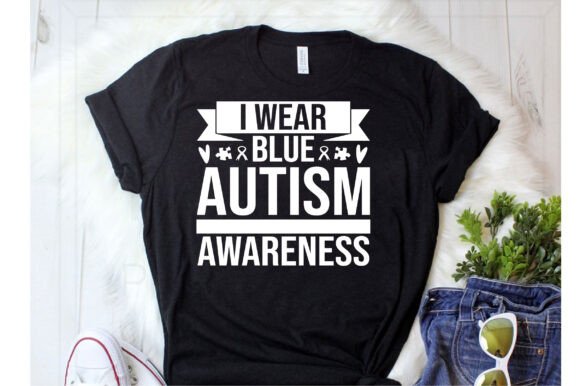
The moment you open the files, the intent of I Wear Blue Autism Awareness. is clear. The typography is bold, centered, and unapologetic. In the world of embroidery, text-based designs are a double-edged sword. They are easy to produce but notoriously difficult to perfect because there is nowhere to hide bad stitching. This design leans heavily into clarity. It creates a mood of support, solidarity, and quiet strength. It doesn’t try to be whimsical; it tries to be seen.
Visually, the layout feels balanced. For an embroiderer, balance is everything. If the visual weight is off, the design will pull to one side during stitching, causing puckering or misalignment. This design appears to have a strong central axis, which suggests it will stitch out smoothly without requiring excessive hooping adjustments. The theme fits naturally into the current market trend where consumers are looking for apparel that signals values rather than just fashion statements. It belongs on items that people wear close to their hearts, quite literally.
Real-World Application: Where Does It Shine?
Let’s talk about real projects. I imagine I Wear Blue Autism Awareness. performing exceptionally well on custom apparel like heavyweight cotton t-shirts and fleece sweatshirts. These fabrics provide the stability needed for clean lettering. When I think about the end-user, I picture a parent buying a personalized gift for a child who has recently been diagnosed, or a supporter attending an awareness walk. In these contexts, the product needs to feel durable and respectful.
For small business owners and Etsy sellers, this design is versatile. It translates beautifully to tote bag designs, offering a subtle yet powerful statement piece that shoppers can carry daily. It also works well as an embroidered patch, which can be ironed or sewn onto denim jackets, backpacks, or baby clothes. The versatility extends to home goods as well; a pillow cover or a kitchen towel featuring this message adds a layer of personality to a home environment.
Consider the holiday season. Personalized gifts are huge during Q4. A sweatshirt embroidery project featuring this message makes for a thoughtful Christmas gift or a birthday present for a family member. The emotional resonance of the phrase often drives higher perceived value, allowing crafters to price their finished products with confidence. It transforms a generic garment into a sentimental keepsake.
Technical Considerations and Stitch Behavior
When evaluating any embroidery file, we must discuss stitch density and detail. While the exact stitch count for I Wear Blue Autism Awareness. varies based on the font size and thread type chosen, text-heavy designs generally rely on satin stitches for outlines and fill stitches for background elements if present. High stitch density can make a fabric stiff and uncomfortable, especially on baby clothes or lightweight tees. Conversely, low density might result in visible backing material showing through.
If you are planning to use this for baby embroidery, you need to be careful. Thin fabrics require lighter stabilizers and potentially fewer layers of thread to prevent bulk. For adult apparel, such as caps or hats, the curved surface presents a challenge. Text on a cap brim or front panel must be digitized with proper underlay to prevent distortion. If the design includes intricate decorative accents or tiny lettering, test it first. Tiny details often get lost in the texture of the fabric or disappear entirely if the thread color lacks contrast against the background.
Thread colors play a massive role here. Blue is the symbolic color for autism awareness, so using various shades of blue thread—from navy to sky blue—can add depth. However, ensure your machine can handle the thread changes smoothly. Dark fabric backgrounds demand bright, high-contrast threads to maintain legibility. Always inspect small details by zooming in on the digital preview before committing to the physical run.
Pitfalls to Avoid
Not every surface is suitable for every design. I Wear Blue Autism Awareness. should be used carefully on textured fabrics like bouclé or heavy wools, as the needle may struggle to penetrate evenly, leading to skipped stitches. Stretchy knits can distort text unless a tear-away or cut-away stabilizer is used correctly. Layered garments, such as hoodies with thick seams, require larger hoop sizes to accommodate the thickness without damaging the machine needle.
Another common mistake is ignoring the aspect ratio. If you plan to place this on a standard 5x7 inch hoop, ensure the design fits comfortably within the bounds. Cropping too close to the edge can result in incomplete letters or awkward negative space. Also, consider the washing instructions. Products that need frequent washing, like aprons or children’s clothing, benefit from denser stitching to withstand abrasion. If the design relies on delicate running stitch lines, they may fray over time.
Practical Designer Notes for Success
To get the best results from this embroidery project, follow these practical steps:
- Test on Scrap Fabric: Never run a full production batch without testing on the actual fabric you intend to sell. Check for puckering, tension issues, and thread breaks.
- Check Thread Contrast: Use black and white mockups to verify that the text remains readable against different fabric colors. Light blue thread on white fabric will vanish; dark navy on black fabric will disappear.
- Confirm Hoop Size: Ensure your machine’s hoop size accommodates the design dimensions plus necessary margin for trimming stabilizer.
- Review Stabilizer Choice: Heavy-duty cut-away stabilizer is usually best for durability, while tear-away works for stable woven fabrics.
- Inspect Licensing: Before selling finished items or digital products, confirm the licensing terms provided with the file. Some licenses restrict commercial use or require attribution.
- Compare Backgrounds: Test the design on both light and dark fabric backgrounds to see how the visual appeal shifts.
Final Verdict
I Wear Blue Autism Awareness. is more than just a graphic; it is a tool for connection. For the experienced embroiderer, it offers a straightforward, impactful design that minimizes technical headaches while maximizing emotional impact. It is ideal for handmade products, boutique branding, and commercial embroidery projects that aim to resonate with customers on a personal level.
Whether you are an Etsy seller looking to expand your catalog, a crafter making a special gift, or a small shop owner adding to your inventory, this design asset provides solid value. It respects the medium of embroidery by prioritizing legibility and balance. By paying attention to stitch density, fabric choice, and thread selection, you can turn this digital file into a cherished finished product. It stands as a testament to the power of thoughtful design in the handmade community.