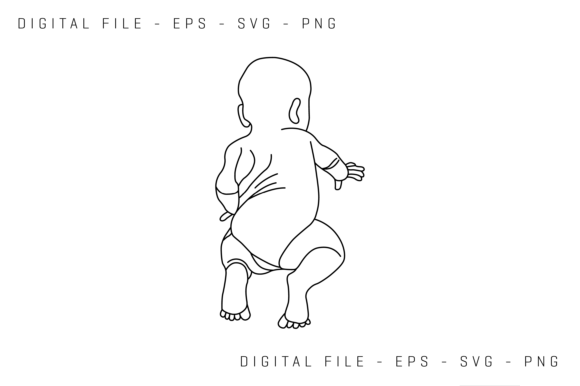
Review: Line Art Drawing of a Baby Crawling Svg
As a designer who spends half my life tweaking stitch paths and the other half worrying about whether a client’s vision will actually survive the embroidery hoop, I approach every new machine embroidery design with a healthy dose of skepticism. We have all seen digital files that look charming on a screen but turn into a muddy, unrecognizable mess once the needle starts moving. That is why I decided to put this specific file through its paces. The product in question is the Line Art Drawing of a Baby Crawling Svg, categorized under Illustrations and Graphics. It promises simplicity, but in embroidery, simplicity is often the hardest thing to execute well.
The First Impression: Mood and Visual Personality
When you first open the ZIP folder containing the editable EPS, SVG, and high-resolution transparent PNG, what strikes you is the clean, minimalist aesthetic. This isn’t a dense, heavily shaded portrait trying to capture every wrinkle or button. Instead, it relies on continuous, flowing lines to depict a baby in motion. For an embroidery project of this nature, this is a smart choice. Complex shading often requires dozens of thread colors and precise blending, which can lead to puckering or a cluttered look on smaller garments. By sticking to a line art style, the design leans into the strengths of machine work: crisp outlines and clear definition.
The mood is gentle, nostalgic, and undeniably sweet. It feels like a sketch from a mother’s journal brought to life. This visual personality makes it incredibly versatile. It doesn’t scream for attention; instead, it invites a closer look. For handmade product creators, this subtlety is gold. It allows the texture of the fabric and the quality of the thread to shine without competing with overly busy details. It creates a sense of elegance that appeals to modern parents who prefer understated nursery decor over loud, cartoonish graphics.
Real-World Application: From Screen to Stitch
Let’s talk about how this embroidery file performs in actual production scenarios. I imagined using this design for a few common small business items: a custom embroidered tote bag for a new mom, a soft sweatshirt for a baby shower gift, and perhaps a set of kitchen towels for a boutique home goods shop.
On a canvas tote bag, the line art style translates beautifully. The contrast between dark thread and natural canvas is stark and legible. Because the design uses open spaces rather than solid blocks of fill, air can circulate through the stitching, reducing the risk of the fabric pulling too tightly. This is crucial for tote bag design integrity, ensuring the bag remains functional and doesn’t warp after washing.
For sweatshirt embroidery or baby clothes, the delicate nature of the lines works well against softer fabrics like cotton jersey or fleece. However, this is where careful planning comes in. A single line of satin stitch can sometimes look thin or fragile if the tension isn’t perfect. I recommend pairing this design with a slightly thicker thread weight, such as 40-weight rayon, to give those lines enough presence to be seen clearly without looking heavy-handed. When executed correctly, the result is a sophisticated custom apparel piece that looks professionally made, not mass-produced.
Where Caution Is Required
No design is perfect for every surface, and being honest about limitations is part of being a responsible reviewer. There are several situations where the Line Art Drawing of a Baby Crawling Svg might present challenges.
- Small Hoop Sizes: If you attempt to digitize or use this on a very small area, such as a tiny chest logo on a onesie, the fine lines may become indistinguishable. The detail could get lost, making the baby look like a blob. Always check your hoop size constraints before committing to a print run.
- Textured or Stretchy Fabrics: Embroidering on ribbed knit caps or highly textured blankets can distort straight lines. The fabric movement during stitching may cause the smooth curves of the crawling baby to wobble or break. On stretchy fabrics, a proper stabilizer is non-negotiable to prevent the design from shifting.
- Dense Stitch Areas: While this is line art, if you decide to add decorative accents or borders around the main image, be wary of creating dense stitch areas. Too much density in one spot can make the finished product stiff and uncomfortable, especially for baby embroidery items that will be worn against sensitive skin.
- Dark Fabric: On black or navy backgrounds, light-colored threads can disappear. You need to ensure high contrast. If you plan to use white thread on a dark shirt, consider using a cut-away stabilizer and possibly a backing layer to prevent show-through, which can ruin the clean look of the line art.
Impact on Product Value and Branding
For Etsy sellers and small shop owners, the aesthetic of your products directly impacts customer trust. A blurry, poorly stitched design signals low quality. In contrast, the clean lines of this design, when stitched correctly, signal professionalism. It suggests that the maker cares about details. This elevates the perceived value of the item, allowing you to price your personalized gift or commercial embroidery pieces at a premium.
Furthermore, the versatility of this design supports brand consistency. Whether you are selling holiday embroidery sets, wedding gifts, or everyday essentials, this motif fits seamlessly into a cohesive brand identity. It is gender-neutral enough to appeal to a broad audience yet specific enough to feel personal. Customers respond well to designs that feel intentional and thoughtfully crafted, and this file provides that foundation.
Practical Designer Notes for Execution
Before you send this to production, here is my checklist for success:
- Test on Scrap Fabric: Never assume a design will work perfectly on your final material. Stitch it out on the exact fabric type you plan to sell.
- Check Thread Color Contrast: Use a mockup tool to visualize the design in different thread colors against various fabric shades. Black thread on blue denim might lack punch; try navy or grey instead.
- Inspect Small Details: Zoom in on the digital preview. Are there any tiny loops or corners that might not stitch cleanly? Simplify if necessary.
- Confirm Licensing: Ensure you have the right to sell finished items made from this digital embroidery file. Check the terms included in your purchase.
- Use Proper Stabilizer: For best results, match your stabilizer to the fabric weight. Tear-away for stable wovens, cut-away for knits.
In conclusion, the Line Art Drawing of a Baby Crawling Svg is a strong candidate for designers looking to add a touch of elegance to their craft business offerings. It avoids the pitfalls of overly complex digitization while delivering a heartwarming image that resonates with buyers. With careful execution and attention to fabric choice, this design can help you create beautiful, marketable finished products that customers will cherish.