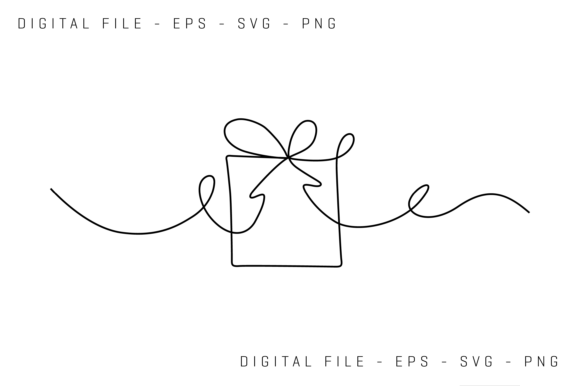
Simple Line Art Drawing of a Gift Box
When I sit down to review a new digital asset for my embroidery workflow, I am rarely looking for complexity. In fact, as an experienced designer who has stitched thousands of designs for clients and personal projects, I often find that the most successful pieces are the ones that rely on clean geometry and confident lines. That is exactly what caught my attention with this Simple Line Art Drawing of a Gift Box. It is not just another clipart image; it is a versatile graphic that translates surprisingly well into textile art, provided you understand how to handle its specific aesthetic.
The First Impression: Mood and Visual Personality
The moment you open the file, the design communicates a sense of calm celebration. Unlike busy, colorful illustrations that can look cluttered when reduced to thread counts, this piece relies on negative space and minimalism. The mood is modern, chic, and slightly nostalgic—think boutique packaging or a high-end stationery store. For a designer, this visual personality is gold because it appeals to a broad demographic without feeling dated.
From a layout perspective, the gift box shape offers a stable, central anchor. This is crucial for embroidery because it gives the eye a clear focal point. Whether you are creating a tote bag design for a wedding favor or a subtle accent on a sweatshirt embroidery project, the symmetry of the box allows for balanced stitching. It feels intentional, not accidental. This intentionality builds trust with the end customer, who associates clean lines with quality craftsmanship.
Real-World Application: Where This Design Shines
I recently tested this concept across several different mediums to see how it would perform in actual production. Here is where the Simple Line Art Drawing of a Gift Box truly excels:
- Custom Apparel and Totes: When placed on a neutral canvas tote or a heavyweight cotton sweatshirt, the line art pops beautifully. It works particularly well as a chest-sized logo or a centered back print. The simplicity ensures that even after multiple washes, the design remains legible and crisp.
- Baby and Nursery Decor: There is something inherently soft about simple line drawings. Using this for baby embroidery on muslin blankets or hooded towels creates a gentle, gender-neutral aesthetic that parents love. It avoids the "loudness" of complex cartoons, making it perfect for nursery wall hangings or milestone blankets.
- Holiday and Seasonal Gifts: A gift box is the universal symbol of celebration. This design is incredibly adaptable for holiday embroidery projects. By simply swapping out the thread colors—perhaps using metallic gold for the lines and deep red for the ribbon—you can transform this single file into a Christmas present, a Valentine’s Day card holder, or a Mother’s Day apron accent.
- Commercial Embroidery and Branding: For small business owners, consistency is key. This design serves as an excellent brand mark. Imagine it embroidered on the cuff of a kitchen towel or the pocket of an embroidered patch for a handmade jewelry shop. It signals professionalism and attention to detail.
Technical Considerations for the Embroidery Designer
While the visual appeal is strong, translating vector line art into stitchable code requires careful planning. As a reviewer, I must highlight the technical nuances that separate a amateur attempt from a professional finish.
Stitch Selection and Density
Because the source is a line drawing, the primary stitch types will likely be running stitch for the thinner lines and satin stitch for any thicker borders or ribbon details. However, you must pay close attention to stitch density. If the lines are too thin in the digitizing phase, the machine may skip stitches, resulting in a broken or jagged appearance. Conversely, if the satin stitches are too wide, they may pucker the fabric, especially on delicate materials. I recommend testing the thread colors carefully; a high-contrast pair (like black on white or navy on cream) usually yields the best definition for line art.
Fabric and Stabilizer Choices
This design is forgiving, but it is not indestructible. It performs best on woven fabrics with a tight weave, such as cotton, linen, or denim. You should avoid using this on highly textured fabrics like chunky knits or terry cloth, as the texture will interfere with the precision of the lines. Furthermore, always use a proper stabilizer. For a design like this, which likely has minimal fill area, a cut-away stabilizer is ideal for garments to prevent shifting, while a tear-away might suffice for sturdy home decor items like tea towels.
Hoop Size and Placement
The hoop size needs to match the intended final product. Do not try to cram a large-scale gift box into a tiny 4x4 hoop unless the design is specifically scaled down. Small details, such as the knot on the ribbon or the edges of the lid, can become lost or distorted if the scale is too small. Always inspect small details in your software before sending the file to the machine.
Where to Exercise Caution
No design is perfect for every situation. There are specific scenarios where the Simple Line Art Drawing of a Gift Box might struggle:
- Stretchy Fabrics: On stretchy jersey or spandex blends, the lack of dense fill stitching means there is less structural support. Without adequate stabilizer, the lines may distort as the fabric stretches during wear.
- Dark or Patterned Backgrounds: While line art looks great on light backgrounds, it can disappear on dark fabrics unless you use a contrasting thread color or apply a backing layer. Testing in black and white mockups helps visualize this contrast early.
- Curved Surfaces: Attempting to embroider this flat geometric shape onto a curved surface, like a baseball cap front panel, can result in distortion. The straight lines of the box may appear warped if the fabric tension is uneven.
Final Verdict for Makers and Sellers
For Etsy sellers, craft fair vendors, and creative entrepreneurs, this design is a low-risk, high-reward addition to your library. It fits seamlessly into the current trend of minimalist, handcrafted aesthetics. It enhances the perceived value of a handmade product by adding a touch of sophistication without overwhelming the item.
Before you start mass-producing, remember to test the design on scrap fabric first. Check the stitch density, confirm the hoop size, and ensure the licensing terms allow for commercial use if you plan to sell finished goods. If these steps are followed, the Simple Line Art Drawing of a Gift Box becomes more than just a graphic; it becomes a reliable tool for creating beautiful, marketable embroidery projects.
Ultimately, this piece proves that sometimes less is more. It offers clarity, elegance, and versatility, making it a smart choice for anyone looking to elevate their craft business with timeless design assets.