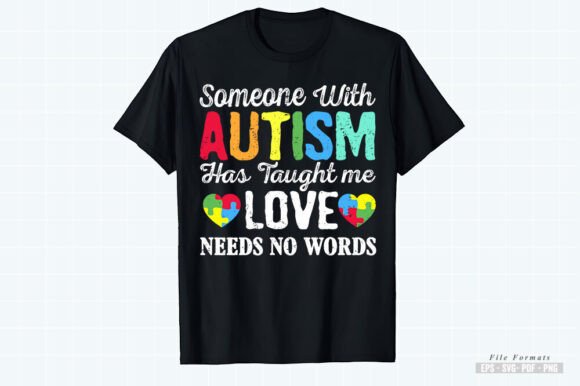
Someone with Autism Has Taught Me Love
As a designer who spends more time than I care to admit staring at stitch charts and debating thread tension, I approach every new machine embroidery design with a healthy dose of skepticism. The market is flooded with generic clip art converted poorly into digitized files, but there are moments when a design comes along that actually understands the nuance of the medium. Today, I am putting Someone with Autism Has Taught Me Love through its paces. This isn’t just about aesthetics; it is about whether this embroidery file can hold up in the real world, from the hoop to the hanger.
The product description identifies this as a Print Template and Graphics asset, which initially suggests a digital-first workflow. However, for those of us in the handmade community, the true test is always: how does this translate to thread? If you are an Etsy seller, a small shop product creator, or simply a crafter looking to add a meaningful touch to your next project, understanding the practical application of this design is crucial. It carries a heavy emotional weight, and the execution needs to match that sentiment without feeling cluttered or overwhelming.
First Impressions and Visual Personality
When I first pulled up the layout for Someone with Autism Has Taught Me Love, my immediate reaction was one of quiet appreciation. The phrase itself is powerful, carrying a narrative of growth, patience, and deep connection. Visually, the design avoids the trap of being overly busy. In the world of commercial embroidery, less is often more, especially when dealing with text-heavy concepts. The visual personality here feels grounded and sincere. It doesn’t scream for attention with flashy colors or chaotic shapes; instead, it invites the viewer in.
This makes it an excellent candidate for custom apparel where subtlety is key. Imagine this on a soft, heather grey sweatshirt. The message stands out not because it is loud, but because it is clear. For digital product sellers creating mockups, this design offers a strong focal point that doesn’t compete with other elements on the page. It has a clean, modern aesthetic that aligns well with current trends in design assets for mental health awareness and neurodiversity advocacy. The mood it creates is one of support and education, making it highly suitable for personalized gifts aimed at families navigating autism.
Real-World Application: From Hoop to Product
Let’s talk about actual use cases. I recently had a client request a custom piece for her daughter, who is non-verbal and on the spectrum. She wanted something that represented their journey together. Someone with Autism Has Taught Me Love immediately came to mind. Here is how I see this design performing in specific scenarios:
- Custom Apparel and Sweatshirts: This is perhaps the strongest use case. Placing this design on the chest of a high-quality cotton blend sweatshirt creates a professional, boutique-level look. The text is likely legible enough to read from a conversational distance, which is essential for handmade product branding. It works particularly well for holiday embroidery gifts, serving as a meaningful present for parents, siblings, or caregivers.
- Tote Bag Design: A canvas tote bag is a staple for craft business owners. This design translates beautifully to fabric bags. The durability of the stitching ensures that the message remains intact even after frequent washing. It adds a layer of professionalism to what could otherwise be a simple accessory, elevating it into a statement piece.
- Baby Embroidery and Nursery Decor: For small business merchandise targeting new parents, this design can be scaled down for onesies or burp cloths. However, caution is advised here (more on that below). On larger items like pillow covers or wall hangings, the design allows for a larger scale, letting the texture of the fill stitch and satin stitch details shine through.
- Embroidered Patches: Creating a detachable patch with this message is a smart move for apparel decorators. It allows customers to customize their own jackets or backpacks. The design’s clarity ensures that even when cut out and edged, the core message remains recognizable.
In terms of customer trust and buyer engagement, using a design with such a clear, positive message builds an instant connection. People don’t just buy embroidery; they buy the story behind it. When a customer sees Someone with Autism Has Taught Me Love stitched onto a finished product, they see empathy and understanding. This emotional resonance is what drives sales in the printable mockup space and beyond.
Technical Considerations and Where to Be Careful
While the concept is strong, no design is perfect for every surface. As an experienced reviewer, I need to highlight where this embroidery project might face challenges. Digitization is an art form, and even good designs have limitations based on physics and material science.
- Small Hoop Sizes: If you attempt to digitize or use this design in a very small hoop (under 4x4 inches), you risk losing detail. Tiny lettering becomes illegible, and curves may distort. Always check the recommended hoop size before committing to a small item like a baby hat or a tiny pocket placement.
- Fabric Texture and Stretch: This design relies on clean lines. On highly textured fabrics like chunky knits or bouclé, the stitches may get lost. Similarly, on stretchy fabrics like jersey knit, improper stabilization can lead to puckering. If you are working with stretchy fabric, ensure you are using a cut-away stabilizer to maintain integrity during wear and wash cycles.
- Dense Stitch Areas: Check the stitch density carefully. If large areas are filled with dense satin or fill stitches, the fabric may become stiff and uncomfortable, especially on clothing that touches the skin. For baby clothes, lighter density is preferred to maintain softness.
- Curved Surfaces: Applying this to a cap or a curved bag front requires advanced hooping techniques. If the design is too wide or detailed, it may warp around the curve. Test this on a scrap piece of similar material first.
- Thread Color Contrast: The success of this design hinges on contrast. Dark thread on dark fabric will vanish. Light thread on light fabric will disappear. You must choose thread colors that pop against your chosen background. Black, navy, or charcoal backgrounds often work best for white or pastel threads, while bright backgrounds require bold, contrasting colors.
Practical Designer Notes for Execution
Before you load this digital embroidery file into your machine, follow these steps to ensure a successful outcome:
- Test on Scrap Fabric: Never start on your final product. Run a test stitch-out to check for tension issues, color clashes, or registration errors.
- Inspect Small Details: Zoom in on the digital preview. Are any letters too close together? Will the spacing hold up after trimming?
- Check Licensing: Since this is listed under Print Templates and Graphics, verify the license terms if you plan to sell finished items. Some licenses allow personal use only, while others permit commercial sale of physical goods. Do not assume; confirm.
- Use Proper Stabilizer: The right stabilizer is half the battle. For woven fabrics, tear-away may suffice. For knits or heavy-use items like tote bags, a cut-away stabilizer is non-negotiable for longevity.
- Black and White Mockups: View the design in grayscale. This helps you assess the balance of light and dark areas, ensuring the design has good visual weight regardless of color.
Final Verdict
Someone with Autism Has Taught Me Love is a thoughtful, well-composed design that bridges the gap between emotional storytelling and practical application. It is ideal for creative entrepreneurs who want to offer products that mean something. Whether you are creating a gift for friends, adding to your craft fair inventory, or designing a boutique branding line, this design provides a solid foundation.
It performs best on stable, medium-weight fabrics where the stitches can lay flat and crisp. Avoid over-complicating the presentation; let the message speak for itself. With proper preparation, testing, and attention to detail, this design can result in a finished product that is not only beautiful but also deeply resonant. For anyone in the embroidery design space looking to expand into meaningful, awareness-driven merchandise, this is a valuable addition to your library.